Postpartum Anxiety and Intrusive Thoughts
Maternal Mental Health
Postpartum Anxiety and Intrusive Thoughts: What’s Normal and When to Get Help
Your mind racing at 3 a.m. does not make you a bad mom.
The first time it happened, I froze. A vivid, horrible image of something happening to my baby flashed through my mind out of nowhere, and I was terrified that thinking it meant something was wrong with me. I didn’t tell anyone for weeks. I wish someone had told me sooner: these thoughts have a name, and they don’t make you dangerous. They make you human.
Postpartum Anxiety Is More Common Than Postpartum Depression
We hear a lot about postpartum depression. But postpartum anxiety affects an estimated 1 in 5 new mothers, and it often hides in plain sight, disguised as “just being a worried mom.” Google searches for “signs of postpartum anxiety” and “intrusive thoughts postpartum” have surged in recent years, which tells us how many women are quietly searching for answers alone.
Let’s pull it into the light.
What Are the Signs of Postpartum Anxiety?
Postpartum anxiety is more than normal new parent worry. Watch for a cluster of these signs of postpartum anxiety:
- Constant, spinning worry you can’t turn off, often about the baby’s health or safety.
- Physical symptoms: racing heart, tight chest, nausea, dizziness, or feeling “wired.”
- Can’t sleep even when the baby sleeps, because your mind won’t stop.
- Checking behaviors: repeatedly checking if the baby is breathing, rereading instructions, needing reassurance.
- Irritability or a short fuse, feeling on edge or easily overwhelmed.
- Dread: a sense that something bad is about to happen.
Intrusive Thoughts: The Secret So Many Moms Carry
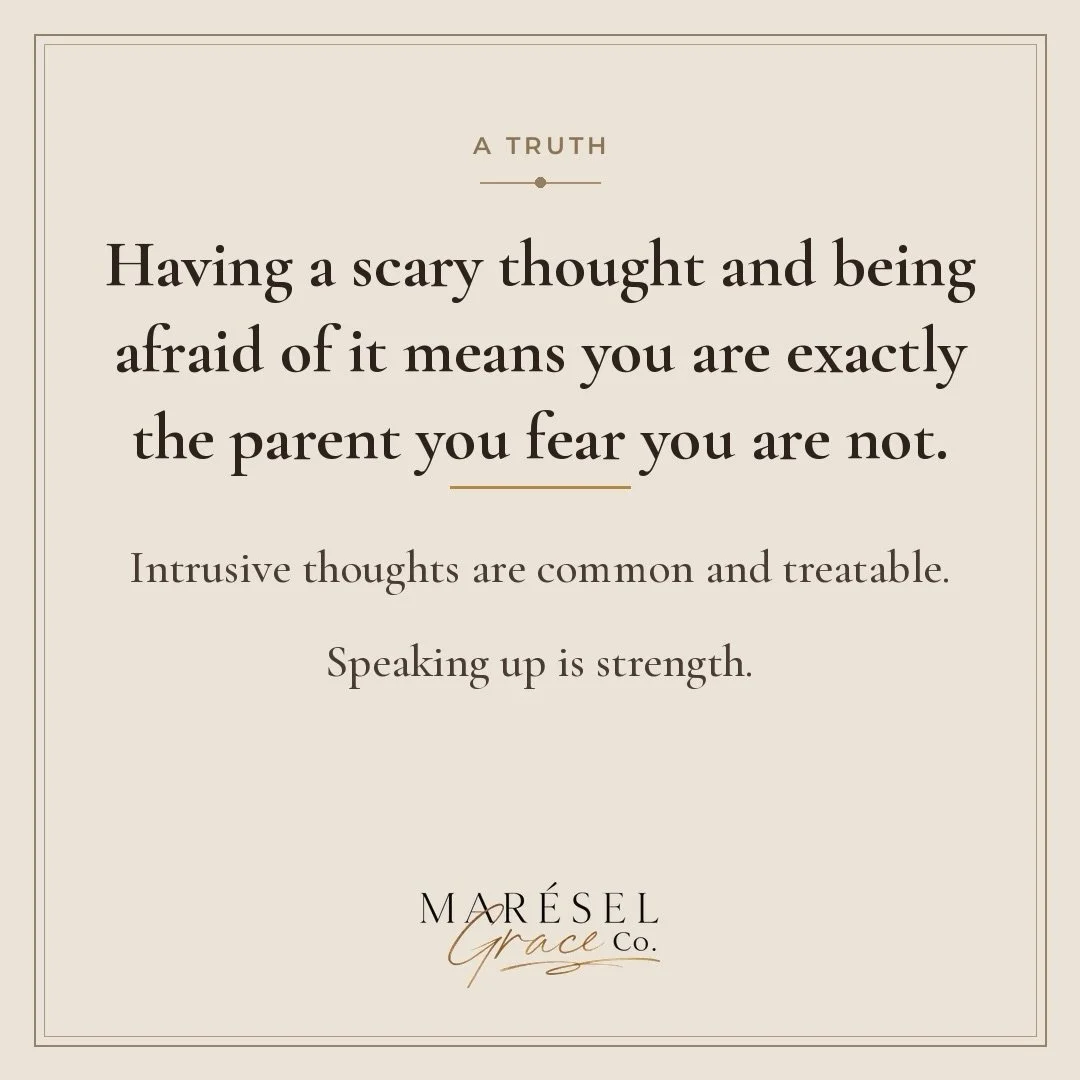
Intrusive thoughts are unwanted, distressing images or “what if” thoughts that pop into your mind uninvited, often about harm coming to the baby. They are one of the most common and most hidden experiences of new motherhood.
Here’s the crucial part: the very fact that these thoughts horrify you is the sign that they are intrusive thoughts, not intentions. Anxiety latches onto what we love most and whispers the worst. A mother with intrusive thoughts is typically hyperfocused on protecting her baby, not harming them.
You are not a monster. You are an exhausted, loving parent whose anxious brain is misfiring. That is treatable, and you deserve relief.
Postpartum Anxiety vs. the “Baby Blues”
It helps to know the difference. The baby blues affect up to 80% of new mothers: weepiness, mood swings, and overwhelm in the first two weeks after birth as hormones crash. The baby blues are temporary and lift on their own.
Postpartum anxiety is different. It lasts longer than two weeks, it doesn’t simply fade, and it interferes with your ability to function, rest, or enjoy your baby. If you’re still gripping your way through spinning worry a month or two in, that’s not something you should have to “wait out.” It’s a sign to reach for support.
It’s also worth knowing that postpartum anxiety often travels with related conditions: postpartum depression, postpartum OCD (where intrusive thoughts and compulsive checking dominate), and less commonly, postpartum panic disorder. These are all real, all common, and all treatable. Naming what you’re experiencing is the first step toward relief, and you don’t have to diagnose yourself. A provider can help.
Why Does This Happen After Birth?
Several forces stack up at once:
- Hormonal freefall. Estrogen and progesterone plummet within days of birth, destabilizing mood and anxiety systems.
- Sleep deprivation. Chronic broken sleep is rocket fuel for anxiety.
- Hypervigilance is evolutionary. Your brain is wired to scan for threats to keep your baby alive. In overdrive, that protective instinct becomes distressing.
- Enormous life change with almost no recovery time.
When to Get Help and Where to Turn
Please reach out if any of these are true for you:
- Your anxiety interferes with daily life: you can’t eat, sleep, or enjoy your baby.
- Intrusive thoughts are frequent or deeply distressing and hard to shake.
- You’re avoiding being alone with your baby, or avoiding certain rooms or objects.
- You feel hopeless, or you’re having thoughts of harming yourself.
Reach out today, help is free and confidential
Postpartum Support International: Call or text the HelpLine at 1.800.944.4773 (English) or text 971.203.7773 (Español), 8am to 11pm EST.
In a crisis: Call or text 988 (Suicide & Crisis Lifeline), any time.
Postpartum anxiety responds very well to therapy, and sometimes medication. You do not have to grip your way through this.
What Helps in the Meantime
While you seek support, small daily practices can genuinely steady an anxious nervous system. None of these replace professional care, but they can turn the volume down while you get it:
- Box breathing. Breathe in for 4, hold for 4, out for 4, hold for 4. Repeat for a minute. This directly signals your body that it’s safe.
- Name the thought. Try, “That’s my anxiety talking, not a fact.” Labeling an intrusive thought as anxiety loosens its grip.
- Get daylight early. Morning light helps regulate mood and sleep hormones. Even five minutes on the porch counts.
- Protect sleep where you can. Trade a night shift with your partner so you get one longer stretch. Sleep is not a luxury, it’s treatment.
- Move your body gently. A slow walk with the stroller burns off the stress chemicals anxiety floods you with.
- Limit the doomscrolling. The 3 a.m. symptom search almost always makes anxiety worse. Bookmark one trusted resource instead.
And the hardest, most important one: tell one safe person the truth. Shame grows in silence. It shrinks the moment you say it aloud to someone who responds with care instead of alarm.
How to Talk About It Without Fear
So many mothers stay silent about intrusive thoughts because they’re terrified of being judged, or worse, of someone overreacting. Here’s language that can help. You might say to your provider: “I’ve been having unwanted, scary thoughts that really upset me, and my anxiety feels out of control. I want to talk about it.”
Providers who understand perinatal mental health hear this all the time. Distressing intrusive thoughts, the kind that horrify you, are recognized as a symptom of anxiety and OCD, not a danger sign. Saying it out loud to the right person is not risky; it’s the beginning of feeling like yourself again.
What Recovery Actually Looks Like
I want to leave you with hope, because hope is the thing anxiety steals first. Postpartum anxiety is highly treatable. With the right support, whether that’s therapy, medication, better sleep, or a combination, the spinning slows. The intrusive thoughts loosen their grip. The tight chest eases. You start to feel present with your baby instead of braced for catastrophe.
Recovery usually isn’t a single dramatic moment. It’s a slow return of small things: a full breath, a night you actually sleep, an afternoon where you forget to worry. Thousands of mothers have walked exactly where you are and come out the other side. You can, too. You just don’t have to do it alone.
How Partners and Loved Ones Can Help
If someone you love is in the grip of postpartum anxiety, your response matters enormously. The most healing thing you can do is stay calm and reassuring when she shares a scary thought, not alarmed. A steady “that sounds exhausting, and it doesn’t make you a bad mom” can undo months of secret shame.
- Take tasks off her plate so her overloaded mind has room to rest.
- Protect her sleep: broken sleep pours fuel on anxiety.
- Help her make the call. Offer to find a provider, sit with her during the appointment, or dial the helpline together.
- Never dismiss it with “just relax” or “you’re overthinking.” Validation, not correction, is what helps.
Anxiety convinces a mother she’s alone and failing. Your steady, nonjudgmental presence is living proof that she’s neither.
You Are a Good Mom
If you take one thing from this, let it be this: the very fact that these thoughts frighten you is evidence of how deeply you love your baby. Anxiety latches onto what matters most to us, which is exactly why it targets your child. It is not a reflection of who you are or the mother you’re becoming. It’s a treatable condition sitting on top of an enormous, protective love.
You are not broken. You are not dangerous. You are not alone. You are a good mom having a hard, common, and fixable experience, and with the right support, you will feel like yourself again. Reach out today. You deserve to enjoy this season, not just survive it.