How to Build Your Postpartum Support Village
Postpartum · Support
How to Build Your Postpartum Support Village
A village does not have to be big. It has to be real, and it has to know how to help.
You have probably heard the phrase "it takes a village." What people rarely mention is that most new parents today don't have one waiting for them. Families live far apart. Friends are busy with their own lives. Many of us go home from the hospital to a quiet house, a new baby and a partner who goes back to work in two weeks. If you feel like you are doing this alone, it is because, in many ways, our culture has set you up to.
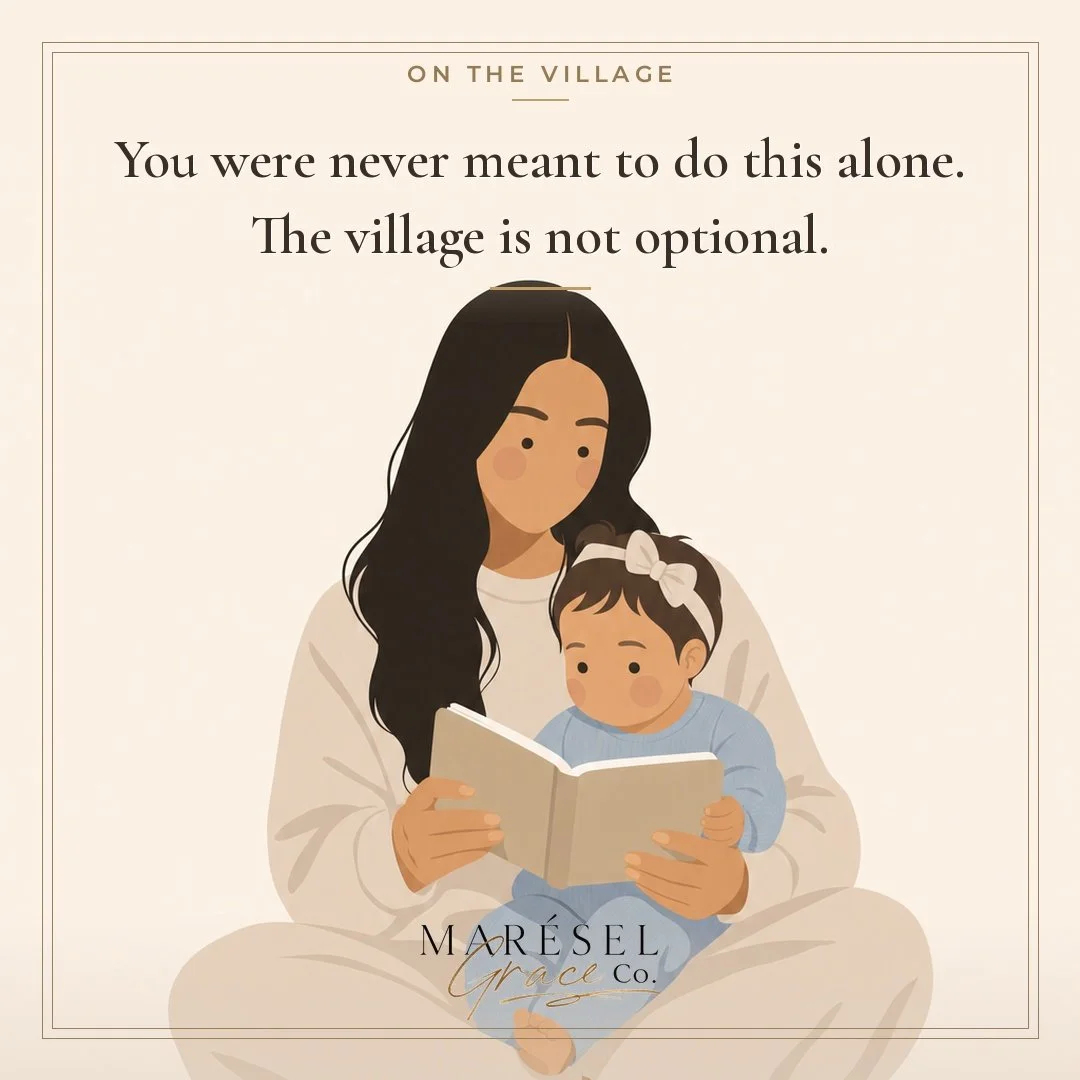
Humans were never meant to raise babies in isolation. For most of history, new parents were surrounded by relatives and neighbors who cooked, held the baby, did the laundry and passed down what they knew. The loneliness so many parents feel now is not a personal failure. It is a gap in how we live.
The good news is that a village can be built on purpose. It might not look like the one your grandmother had, and that is fine. It can be a mix of family, friends, neighbors, paid help and professionals. What matters is that the people in it know what you need and how to show up.
As a mom of five, this is something I think about a lot. Here is how I encourage parents to build theirs.
Why Support Matters So Much
Support is not a luxury in the postpartum period. It is one of the strongest protective factors we know of for parental mental health. Research on postpartum depression consistently finds that low social support is one of the biggest risk factors, and strong support is linked with lower rates of depression and anxiety.
Support helps in two ways. The practical kind, like meals, childcare and help with chores, protects your sleep and energy. The emotional kind, like someone who listens without judging, protects your sense of yourself. You need both.
Step 1: Map What You Need
Before you can ask for help, it helps to get specific about what help looks like. "I need support" is hard for other people to act on. "I need someone to watch the baby Tuesday afternoon so I can nap" is easy.
Sit down, ideally before the baby arrives or during a calm moment, and think through these categories:
- Food. Who will cook, deliver meals or grocery shop in the first weeks?
- Sleep. Who can take a night feed or an early morning so you can rest?
- Household. Laundry, dishes, pet care, trash day, older kids' school runs.
- Baby care. Someone to hold the baby while you shower, eat or step outside.
- Emotional support. Who can you call when you're crying at 3am? Who gets it?
- Information. Who can answer feeding questions, sleep questions, "is this normal" questions?
- Professional care. Your OB or midwife, pediatrician, lactation consultant, therapist or coach.
You won't have every box filled, and that is okay. The point is to see where the gaps are.
Step 2: Make a List of Your People
Now think about the people around you, even the ones you might not normally ask for help. Write them down. Include:
- Family, near and far
- Close friends
- Neighbors
- Coworkers or friends from work
- People from your church, mosque, synagogue or community group
- Other parents you know from daycare, school or activities
- Paid helpers like a postpartum doula, babysitter or cleaner, if that is possible for your budget
Next to each name, jot down what they are good at. Your mother-in-law might be great with the baby but not great with emotional conversations. Your college friend might live across the country but be the perfect person to text at 3am. Your neighbor might be happy to walk the dog. Matching people to tasks makes it more likely they will say yes and follow through.
Step 3: Ask, Specifically
Asking for help is hard for a lot of people. Many of us were raised to believe that needing help means we are failing or being a burden. But most people want to help new parents. They often just don't know how.
Specific asks work best. Compare these:
- "Let me know if you need anything." (Common, well-meaning, hard to act on.)
- "Could you drop off dinner on Thursday? Anything works, we're not picky."
- "Would you be willing to come over Saturday morning for two hours so I can sleep?"
The second and third give people a clear yes or no. If someone says "let me know if you need anything," take them up on it with a specific request. You are doing them a favor by telling them how to help.
A few other tips:
- Use a meal train or shared calendar. Free online sign-up tools make it easy for friends to pick a day to bring food.
- Keep a running list on the fridge. When someone visits and asks "what can I do," point them to the list: fold laundry, empty the dishwasher, hold the baby.
- Let your partner or a friend coordinate. You don't have to be the project manager of your own support.
A gentle reminder
You do not have to repay every favor right away. Seasons of life shift. Right now, it is your turn to receive. Later, you will be the one dropping off soup for someone else.
Step 4: Set Boundaries With Your Village, Too
Support is only helpful if it actually helps. Some visitors bring stress instead of relief: they want to hold the baby while you do the dishes, they offer unwanted advice, or they stay too long.
It is okay to set expectations. Some parents find it helpful to share a few simple house rules before visits, like:
- Please text before coming over
- Visits are 30 minutes to an hour for now
- Please wash your hands and stay home if you're sick
- The most helpful thing you can do is a chore, not holding the baby
You can also ask your partner to be the one who enforces these, so you don't have to. Protecting your rest and your space is part of building a village that works.
Step 5: Find Your People Who Get It
Some support can only come from people who are in the same season. Other parents of babies understand the sleep deprivation, the feeding struggles and the identity shifts in a way that others might not.
Places to find them:
- New parent groups through your hospital, library or community center
- Postpartum Support International's free online support groups, including groups for dads, parents of NICU babies and parents after loss
- Stroller walking groups or baby-and-me classes
- Online communities, as long as they leave you feeling better and not worse
It can feel awkward to make new friends as an adult, especially while exhausted. Start small. One text to another mom from a baby class ("Want to walk this week?") can be the start of something that carries you through the whole first year.
Step 6: Include Professional Support
A village also includes people whose job is to help. Many parents wait until they are in crisis to add professionals to their support system, but they are often most helpful early on.
Think about including:
- A lactation consultant if feeding is hard
- A postpartum doula for hands-on help at home
- A pediatrician you trust and feel comfortable calling
- A therapist or coach for your own emotional well-being
At Marésel Grace, we see coaching as one piece of the village: someone who checks in on you regularly, helps you think through challenges and notices if you need more support. For parents who need clinical care, therapy is available too, for Massachusetts residents.
If You Truly Have No One Nearby
Some parents read lists like this and feel even lonelier, because they don't have family nearby, their friends are far away, or they have just moved. If that is you, please know that a village can still be built, even starting from zero.
Start with one or two connections. That might be a support group that meets online, a coach or therapist, a neighbor you wave to, or one other parent you meet at the library. Paid help, even just a few hours a week, can also make a big difference if it is possible for you. Over time, those few threads can grow into something stronger.
Your Village Can Change Over Time
The people who help in the first two weeks might not be the same people who help at month six or the first birthday. That is normal. Needs change, and so do people's availability. Check in with yourself every few months. What is working? Where are the new gaps? Who might you add?
A village is not something you build once and finish. It is something you keep tending, the same way you tend a friendship. The care you put into it now will come back to you many times over.
Let Us Be Part of Your Village
Marésel Grace offers coaching for parents anywhere in the US and therapy for Massachusetts residents, in person in Harvard or by video. Kids are always welcome.
Book a Consultation