Why Am I So Anxious During Pregnancy? Understanding Prenatal Anxiety
Pregnancy · Mental Health
Why Am I So Anxious During Pregnancy? Understanding Prenatal Anxiety
Some worry in pregnancy is part of caring deeply. When worry starts running your days, it deserves attention.
Pregnancy is supposed to be a happy, glowing time, or at least that is the story we are told. For a lot of people, it is also a time of intense worry. Is the baby okay? Is that twinge normal? What if something goes wrong at the birth? What if I'm not cut out for this? If your mind has been running in circles, you are not alone, and there are real ways to feel steadier.
Most conversations about perinatal mental health focus on the postpartum period. Anxiety during pregnancy gets far less attention, even though it is very common. Research suggests that somewhere around 1 in 5 pregnant people experience significant anxiety symptoms, and some studies put the number higher. Prenatal anxiety is also one of the strongest predictors of postpartum anxiety and depression, which makes it worth taking seriously early.
This post walks through why anxiety shows up during pregnancy, how to tell ordinary worry from something more, and what helps.
Why Pregnancy Can Bring So Much Worry
There are a lot of good reasons anxiety spikes during pregnancy. Knowing them won't make the anxiety disappear, but it can help you understand that you are not overreacting and that nothing is "wrong" with you for feeling this way.
Your body is changing fast
Pregnancy hormones affect the brain as well as the body. Rising levels of estrogen, progesterone and other hormones can change how you experience stress and emotion. Many people notice they feel more emotional, more easily startled or more on edge than usual.
The stakes feel incredibly high
For many parents, pregnancy is the first time they have felt responsible for another life in such a complete way. That can bring a deep protective instinct, and a lot of fear along with it.
So much is out of your control
You can take your vitamins, go to every appointment and follow every guideline, and still not control how the pregnancy goes. For people who cope with stress by planning and preparing, that lack of control can feel unbearable.
Information overload
Apps, forums, social media, family members and well-meaning strangers all have something to say. Late-night searches about symptoms can turn a small worry into a spiral in minutes.
Past experiences
If you have been through pregnancy loss, infertility, a traumatic birth or a complicated earlier pregnancy, anxiety in this pregnancy makes complete sense. Your mind is trying to protect you from being hurt again.
Life changes
Pregnancy often comes with big shifts: money worries, changes in work, a new home, relationship stress, questions about identity. All of those add to the load.
Normal Worry or Prenatal Anxiety?
Some worry during pregnancy is completely normal. It is part of preparing for a huge life change. The question is whether the worry is helping you or running your life.
Ordinary pregnancy worry often:
- Comes and goes
- Is tied to specific events, like an upcoming scan or test
- Eases when you get reassurance or information
- Doesn't stop you from sleeping, working or enjoying things
- Feels manageable most of the time
Prenatal anxiety may look like:
- Worry that is constant or hard to switch off
- Racing thoughts, especially at night
- Needing reassurance again and again, but it never quite sticks
- Checking symptoms, the baby's movements or the internet repeatedly
- Avoiding things because of fear, like appointments, scans or talking about the birth
- Trouble sleeping because your mind won't settle
- Physical symptoms like a racing heart, shortness of breath, tight chest, nausea, dizziness or muscle tension
- Panic attacks
- A sense of dread that something bad is going to happen
- Intrusive thoughts or images that frighten you
- Irritability and feeling constantly on edge
If several of those sound familiar and have lasted for a couple of weeks or more, it is worth talking to your provider or a mental health professional.
Types of Anxiety That Can Show Up in Pregnancy
Anxiety can take different forms. Knowing the names can help you describe what you're feeling.
- Generalized anxiety: Constant, wide-ranging worry about many things at once, from the baby's health to money to the future.
- Panic disorder: Sudden waves of intense fear with physical symptoms like a pounding heart, shaking or feeling like you can't breathe.
- Perinatal OCD: Unwanted, distressing thoughts (often about harm coming to the baby) and urges to do things like check, clean or seek reassurance to make the fear go away.
- Tokophobia: An intense fear of childbirth that can make it hard to think about or plan for the birth.
- Health anxiety: Constant worry about symptoms and whether something is wrong with you or the baby.
A lot of people experience a mix. You don't need to know exactly which one fits to get help.
A note about intrusive thoughts
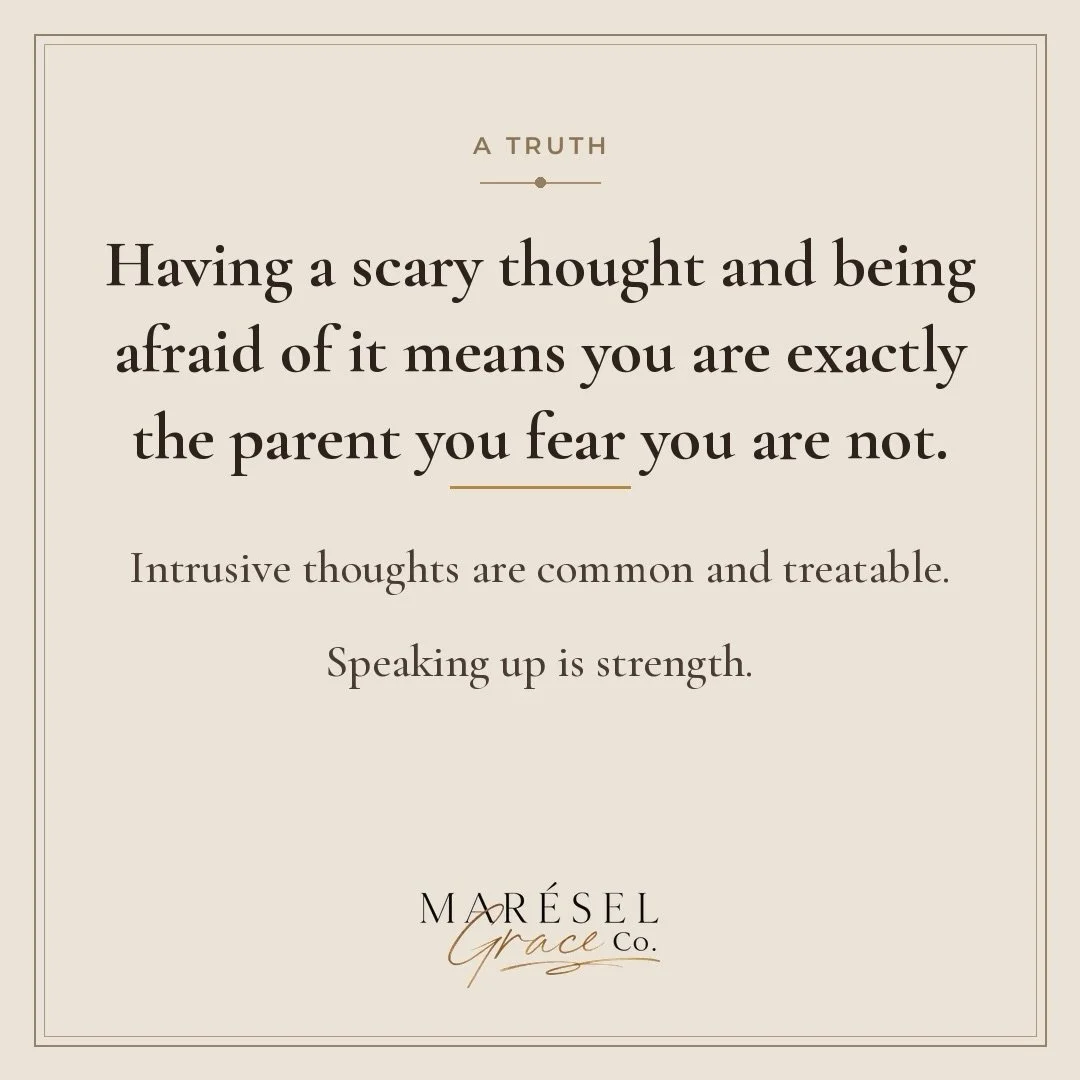
Many pregnant and postpartum parents have sudden, scary thoughts about something bad happening to the baby, sometimes even thoughts of harm they would never want to cause. These thoughts are very common, and having them does not mean you are dangerous or will act on them. They are usually a sign of anxiety, and they respond well to treatment. If thoughts like these are frequent or distressing, a perinatal therapist can help.
What Helps: In the Moment
When anxiety spikes, these tools can help calm your body so your mind can follow.
Slow your breathing
Try breathing in through your nose for a count of four, holding for a moment, and breathing out slowly through your mouth for a count of six or seven. Long exhales tell your nervous system that you are safe. Repeat for a few minutes.
Ground yourself in the present
Anxiety lives in the future. Grounding brings you back to now. Try the 5-4-3-2-1 exercise: name five things you can see, four you can touch, three you can hear, two you can smell and one you can taste.
Put your hands on your belly
For many pregnant parents, placing a hand on the belly and speaking to the baby, even silently, is calming. It can shift the focus from fear to connection.
Name the worry
Say it out loud or write it down: "I'm worried the baby isn't moving enough." Naming the fear makes it easier to decide what to do with it, whether that is calling your provider or letting the thought pass.
What Helps: Over Time
Limit the late-night searching
Set a rule for yourself, like no symptom searching after 8pm, or only checking trusted sources. Write questions down for your next appointment instead.
Pick one or two trusted sources
Choose a reliable pregnancy resource and your own provider as your main sources of information. Step back from forums or social accounts that leave you feeling worse.
Move your body
Gentle movement like walking, prenatal yoga or swimming can lower anxiety and improve sleep. Check with your provider about what is right for you.
Protect your sleep
Pregnancy sleep can be hard, but a wind-down routine, a cool dark room and a pregnancy pillow can help. Anxiety tends to get louder when you are tired.
Talk about the birth
For many people, a lot of anxiety centers on labor and delivery. Talking through your fears with your provider, a doula or a therapist, and making a flexible birth plan, can help you feel more prepared and less at the mercy of the unknown.
Stay connected
Isolation feeds anxiety. Spend time with people who help you feel calm. Join a prenatal class or group where you can hear from others going through the same thing.
When to Get Professional Help
It is time to reach out if your anxiety is:
- Taking up a lot of your day
- Keeping you from sleeping
- Affecting your relationships or work
- Causing panic attacks
- Showing up as intrusive thoughts that frighten you
- Leading you to avoid prenatal care
Anxiety during pregnancy is very treatable. Therapy approaches like cognitive behavioral therapy are safe during pregnancy and have strong evidence behind them. Some people also benefit from medication, and there are options your provider can discuss with you, weighing the benefits and risks for your specific situation.
Tell your OB or midwife how you have been feeling. You can say something as simple as, "I've been really anxious lately and it's getting in the way. Can we talk about that?" They hear this often and can help you find support.
If you are in crisis
If your anxiety has become overwhelming, if you are having thoughts of harming yourself, or if you feel unsafe, please reach out now. Call or text 988, call the National Maternal Mental Health Hotline at 1-833-852-6262 (available 24/7), or call 911.
For Partners
If your partner is anxious during pregnancy, you might feel helpless or unsure what to say. A few things usually help:
- Listen without trying to fix it right away. "That sounds really scary" goes further than "I'm sure it's fine."
- Come to appointments when you can, and help write down questions.
- Take on some of the planning, like researching childcare or setting up the nursery, if that is a source of stress.
- Encourage rest and time away from screens.
- If the anxiety seems to be getting worse, gently suggest talking to someone, and offer to help make it happen.
Partners can feel anxious during pregnancy too. It is okay to have your own worries, and to get support for them.
Why Getting Help Now Matters
Treating anxiety during pregnancy does more than help you feel better now. It also lowers the chance of postpartum anxiety and depression later. You deserve to experience this pregnancy with less fear, and to go into the postpartum period with tools and support already in place.
At Marésel Grace, we work with parents during pregnancy as well as after. Coaching can help you prepare practically and emotionally. Therapy is available for Massachusetts residents who need clinical support for anxiety, panic or intrusive thoughts.
You don't have to wait until the baby arrives to take care of yourself.
Feeling Anxious During Pregnancy?
Book a consultation and we will help you find support for this season, so you can go into birth and the months after feeling steadier.
Book a Consultation